Performance
Marketing &
Tracking
Client
Wollongong City Council
Platform
Meta Ads + Google Tag Manager
Scope
Wollongong Tourist Parks + Go Electric
Wollongong Tourist Parks had existing Meta spend but no Pixel tracking — campaigns optimising for link clicks, with no connection to actual booking intent. Before running any spend, I audited the full booking funnel, mapped the events that mattered, and built the tracking architecture from scratch.
A fresh Meta Pixel has no conversion history, no audience data, no learning. Running a Purchase campaign on a small park means roughly five conversions a week per ad set — far below the 50+ needed to exit the learning phase. The algorithm stays trapped, showing ads to random traffic rather than people who actually book.
I chose Search as the primary optimisation event. In Newbook's booking flow, Search fires when a visitor selects travel dates — a genuine planning signal from someone actively deciding to book. It converts at roughly 30× the rate of Purchase, reaching the 50+ weekly threshold within the first few weeks of the campaign.
Phase 1: broad Advantage+ targeting optimising for Search — cold audiences, no overlays, let the signal do the work. Phase 2: Checkout retargeting, warm audiences who had shown intent but not converted. Phase 3 shifts to Purchase once volume grows.
Seven tags in the WTP workspace: Meta Pixel base code, GA4 configuration, and event tags for ViewContent, Search, Lead, InitiateCheckout, and Purchase. All custom HTML — Newbook's booking platform required trigger conditions that standard templates couldn't handle.
Search was the most technically complex event. Newbook's date picker is an interactive widget that doesn't reload the page when dates are selected. I built a listener tag that pushes a datesSelected event to the dataLayer when dates are chosen — triggering the Search Pixel event. Without it, Search would never fire.
User-defined variables capture what each conversion means: park_name from the URL path (Bulli, Corrimal, or Windang), booking_price scraped from the confirmation page DOM, and arrival and departure dates from the dataLayer push. Every conversion tells Meta not just that something happened, but where and for how much.
All events were verified in Meta Events Manager before the container published or any spend ran — each tag showing Active with a confirmed test event.
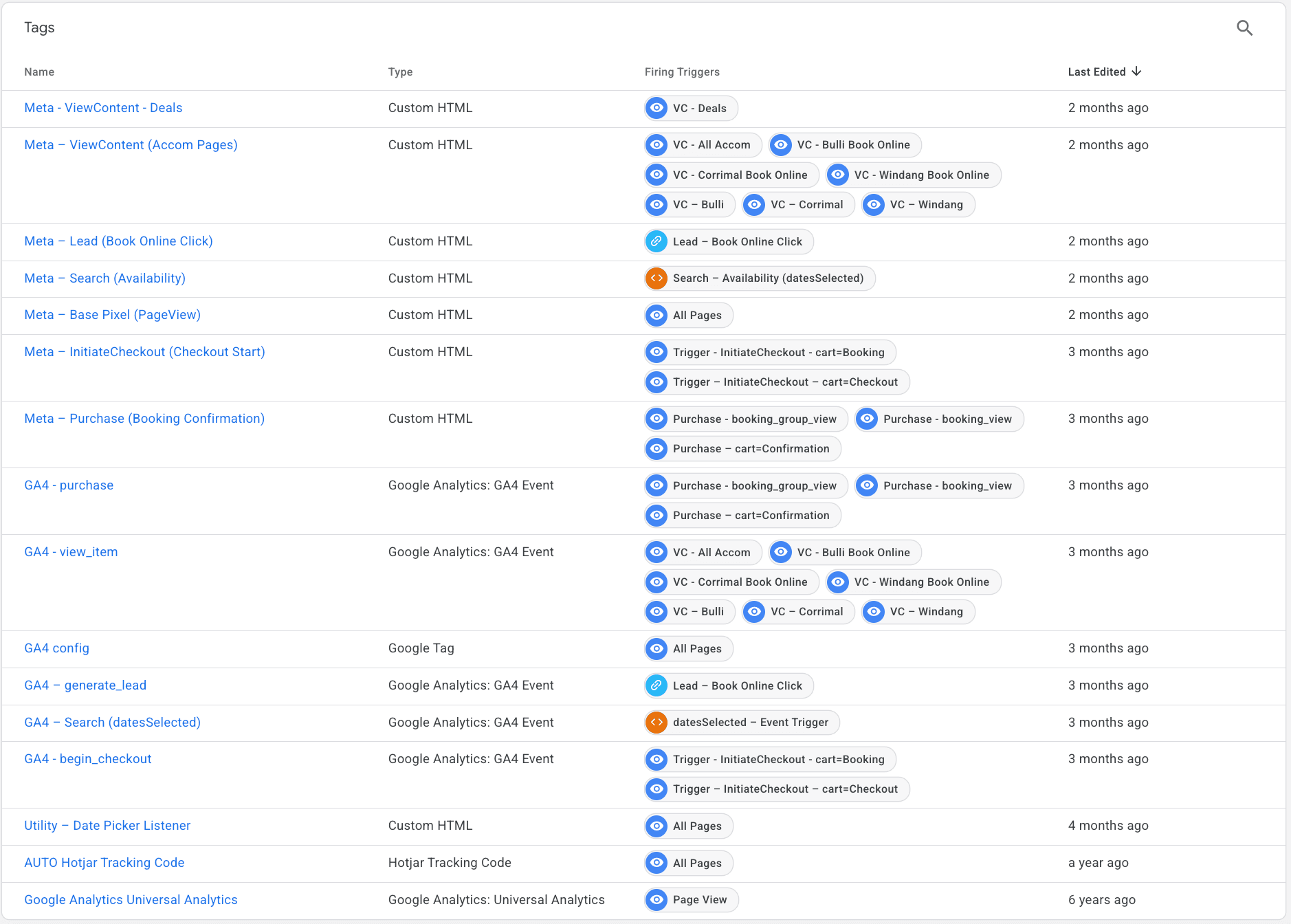
Seven tags in the Wollongong Tourist Parks workspace — Meta Pixel base code, GA4 configuration, and individual event tags for ViewContent, Search, Lead, InitiateCheckout, and Purchase. All custom HTML rather than standard templates, because the Newbook booking platform required trigger conditions that template tags couldn't handle.
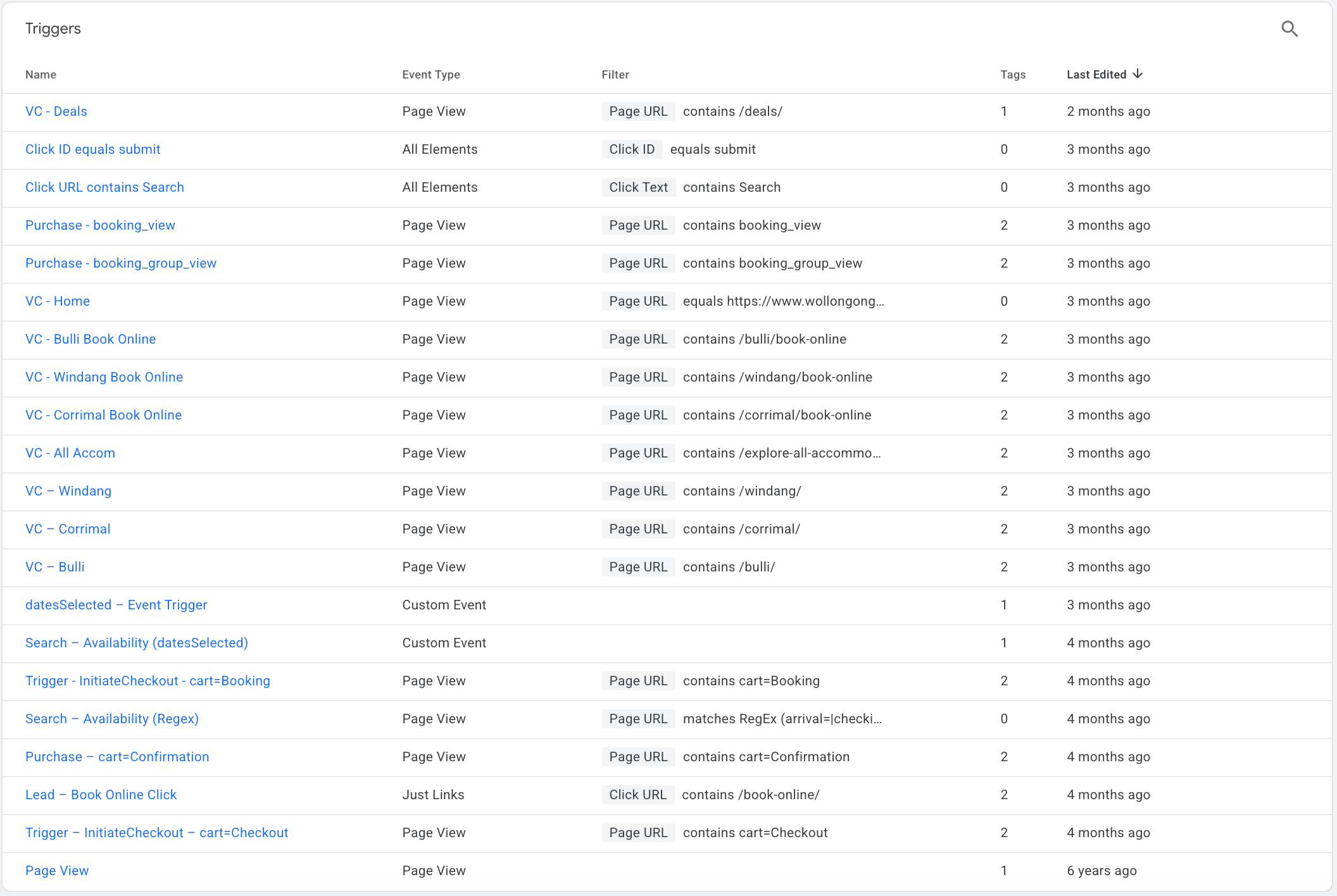
The trigger logic is where the setup becomes precise. Search fires on a custom datesSelected dataLayer event — not a page load, but a JavaScript push from a listener I attached to Newbook's date picker widget. InitiateCheckout fires when the URL contains cart=Checkout. Purchase fires on cart=Confirmation. None of these are defaults. Each one maps to a specific, real booking action.
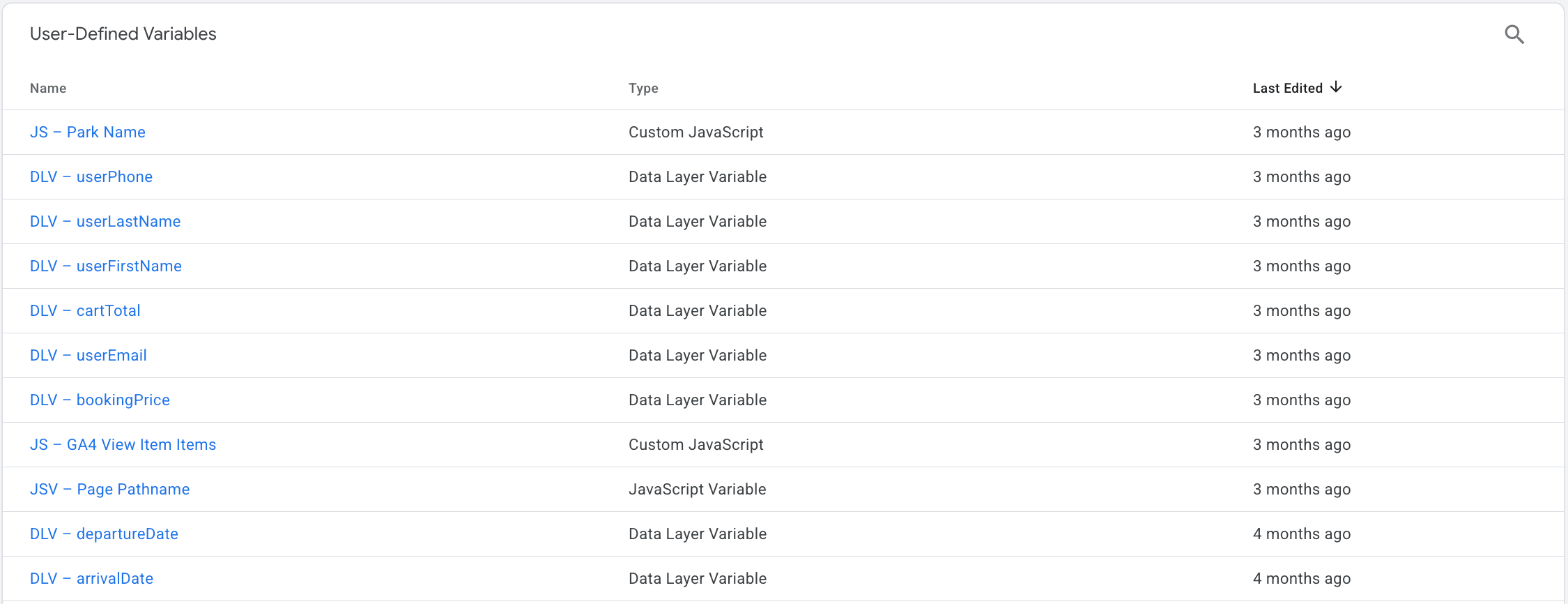
Three variables make conversion data useful beyond a raw count. park_name reads from the URL path — /bulli/, /corrimal/, or /windang/ — so every event tells Meta which park the visitor was on. booking_price scrapes the confirmed total from the confirmation page DOM. Arrival and departure dates come through the datesSelected dataLayer push from the date picker listener.
Two campaigns in parallel for Wollongong Tourist Parks. Campaign 1 — Search Conversion — broad Advantage+ targeting, audience kept wide to let Meta build its pool from scratch, Purchasers excluded. Campaign 2 — Checkout Retargeting — warm audiences who had viewed accommodation, searched availability, reached checkout, but hadn't completed a booking. Both ran over an initial one-month optimisation period.
Go Electric required a different approach — no booking engine, no purchase path. Cold prospecting optimised for ViewContent, reaching new audiences via lookalikes built from Emissions Page Visitors, WCC Page Engagement, and Emissions Button Clickers. Warm retargeting optimised for Active Dwell 60s — visitors who had spent 60+ seconds engaging with content. The GTM build followed the same framework, triggers remapped to Go Electric's content engagement funnel.
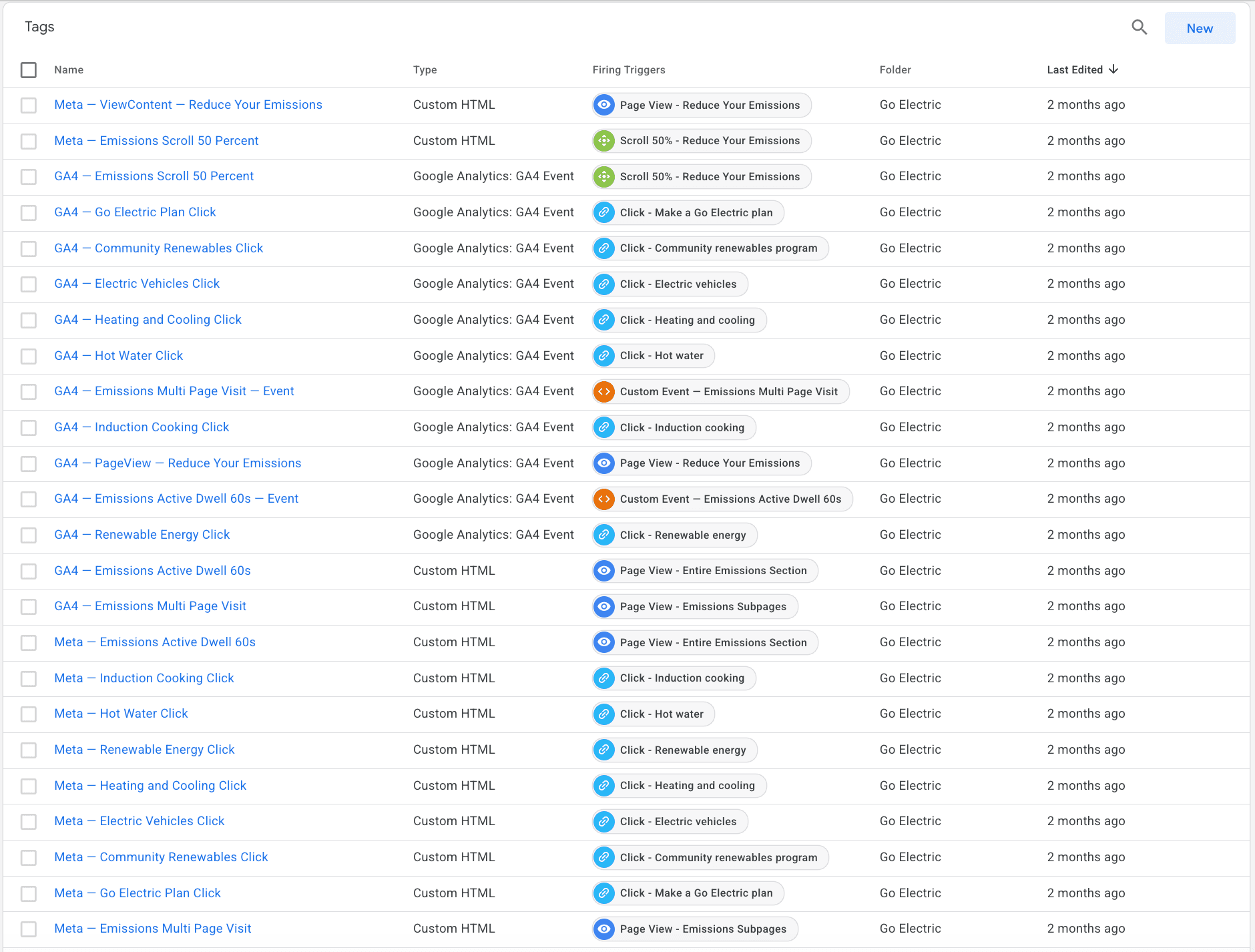
Same logical framework applied to the second Council property — Go Electric, an information and content platform with a different conversion path. No booking engine, so the funnel events focus on Lead generation: form submissions and intent-signalling interactions rather than a purchase flow.
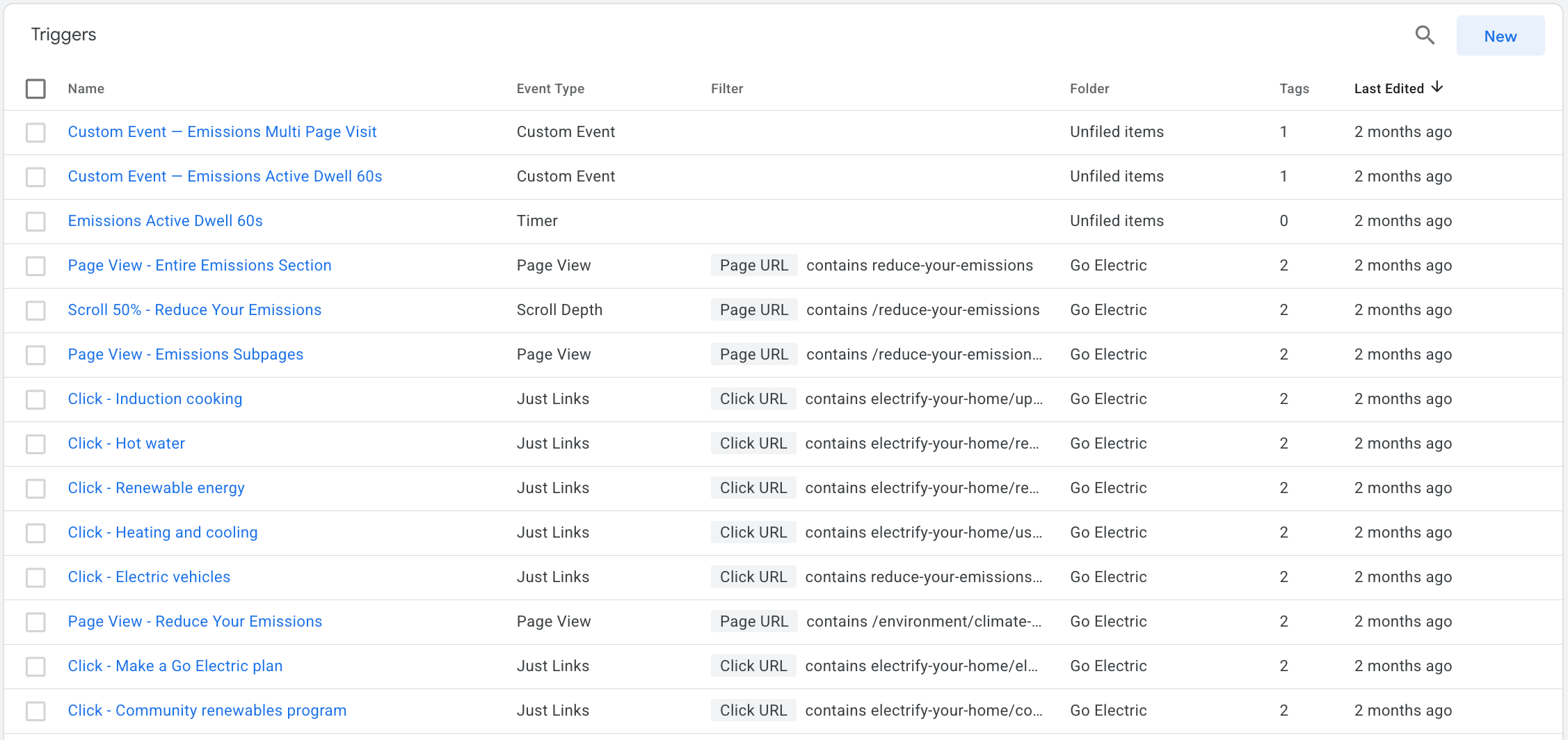
Trigger conditions adapted for Go Electric's page structure and content. Where WTP triggers relied on Newbook URL parameters and a custom dataLayer event, these fire on form submissions, button click events, and page views matching the content engagement patterns relevant to the campaign's lead generation goals.
Wollongong Tourist Parks: 3,682 Search conversions at $0.06 CPR. Checkout retargeting generated 143 conversions at $0.70 CPR.
Go Electric: 116 ViewContent conversions at $0.28 CPR. Warm retargeting generated 28 Active Dwell 60s conversions at $0.72 CPR.
The Tourist Parks campaigns exited the learning phase quickly — Search volume gave Meta enough signal to improve targeting well before Purchase counts would have been sufficient on their own.
Wollongong City Council now has a verified tracking architecture across both properties — clean conversion signals, data passing to Meta and GA4, and full written documentation of every tag and trigger. Built to be maintained independently.
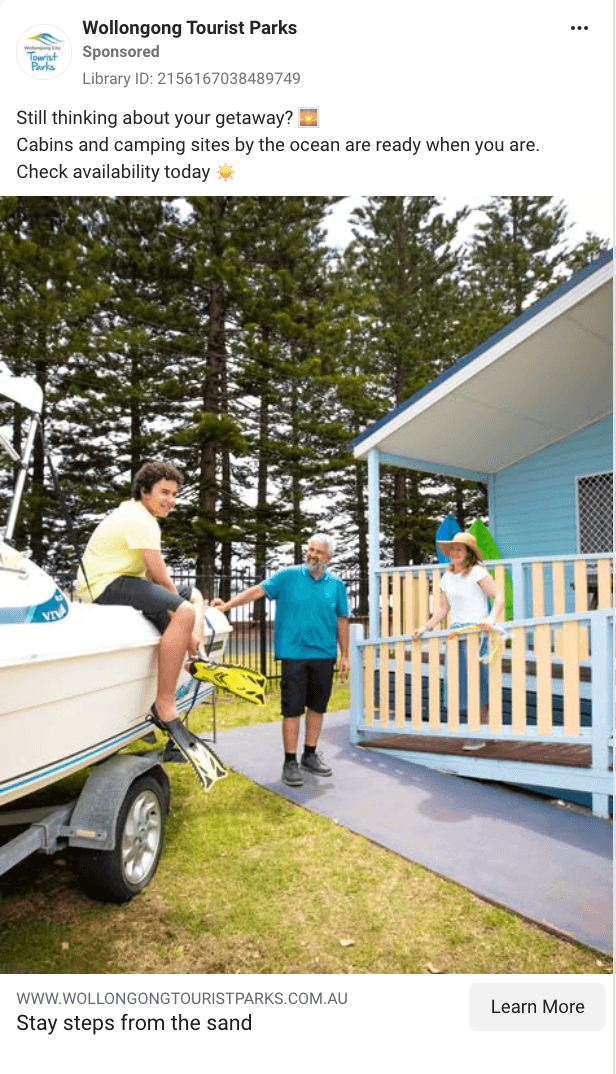
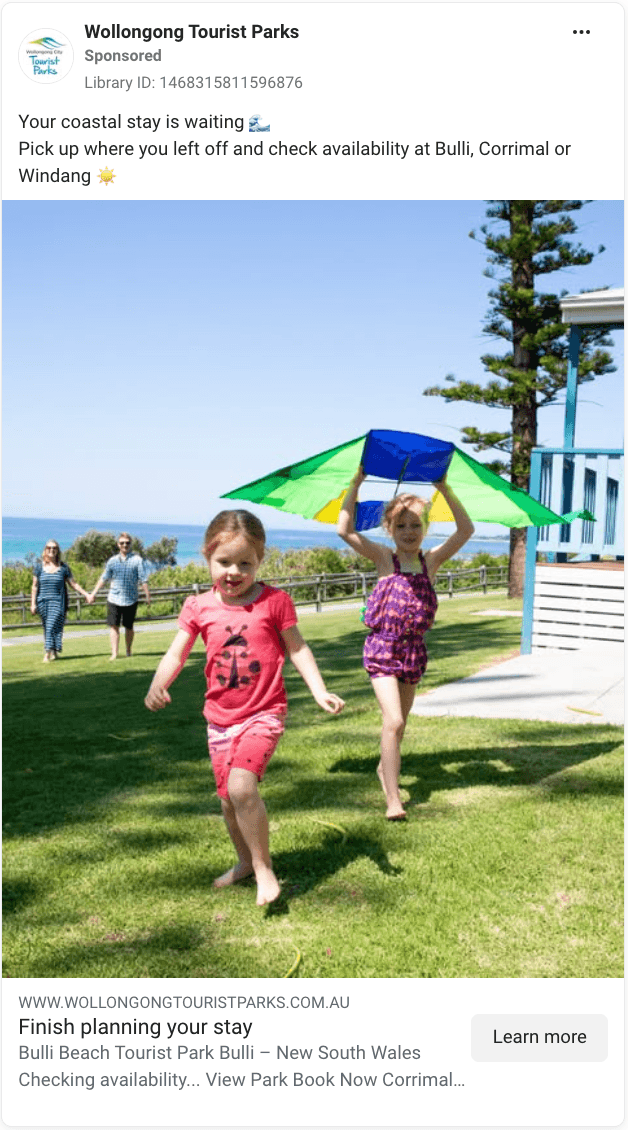
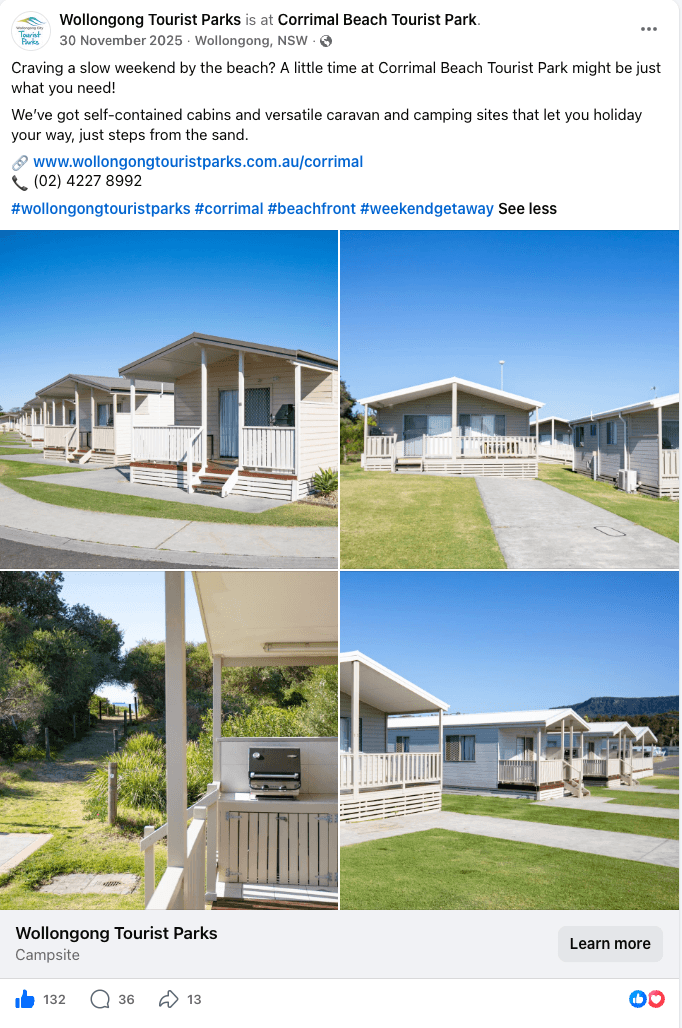
Ad creative from the initial one-month optimisation period — Wollongong Tourist Parks. Search campaign drove awareness and availability intent. Retargeting re-engaged warm audiences who had reached checkout but not booked.
Campaign 1 — Search Conversion
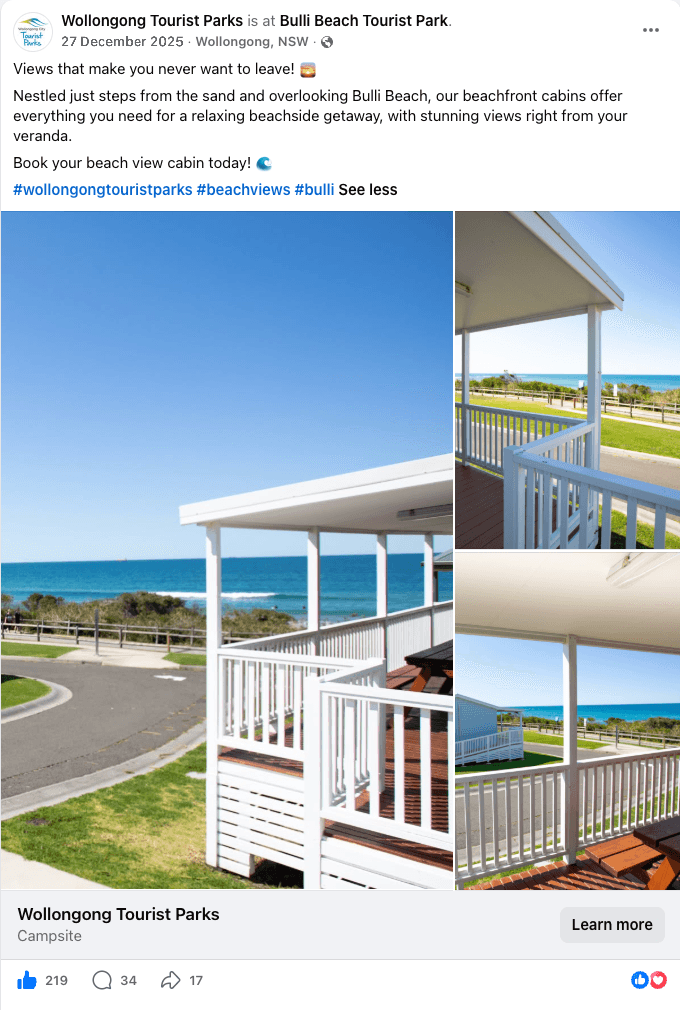
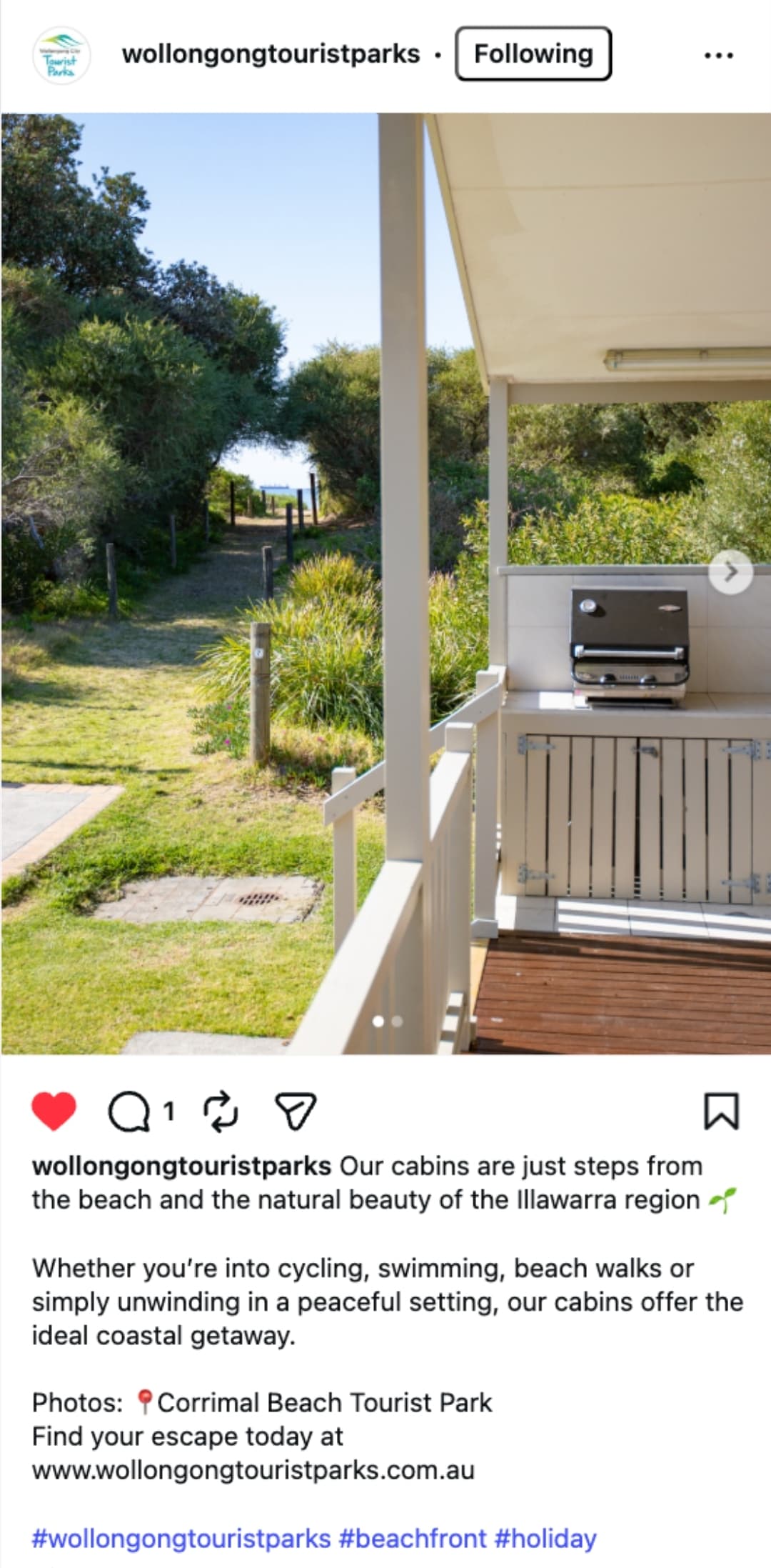
Campaign 2 — Checkout Retargeting